หมวดหมู่
สินค้าใหม่
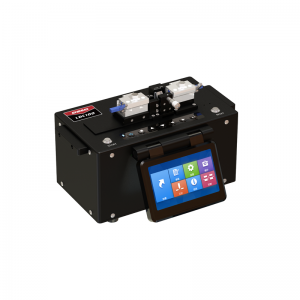
LDC-100 ساطور ألياف بصرية بقطر كبير * ใช้ได้กับเส้นใยขนาดเส้นผ่านศูนย์กลาง 80μm~600μm *ปั๊มสุญญากาศ ร่องวี ใส่ไฟเบอร์สะดวก *ใบมีดทนทาน อายุการใช้ งานมากกว่า 20,000 ครั้ง *จัดเก็บข้อมูล 4000 กลุ่ม *เมนู GUI ที่ใช้งานง่ายใช้งานง่าย มากกว่า
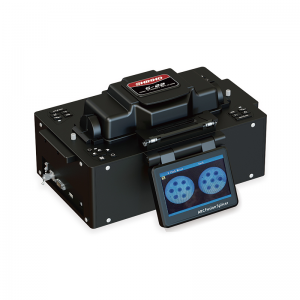
S-22 Multi-Core Fiber Fusion Splicer F ully AอัตโนมัติM ulti-core F iber F usion S plicer ในประเทศจีน มากกว่า
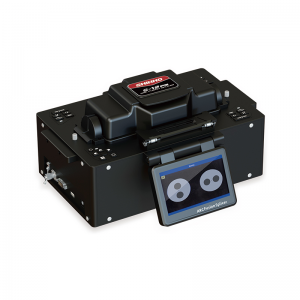
Polarization ต้องรักษา(PM)ไฟเบอร์ฟิวชัน Splicer S-12 *องลึกไปยังแกนแล้ว name ตำแหน่งที่ต่ำ splicing การสูญเสีย *Endview และโพรไฟล์การสังเกตการณ์และตำแหน่ง *Arc อัตโนมัติปรับตั้งแท่งควบคุมและ splicing *PM นไฟเบอร์เหนียวพิเศษ 45 และ 90 องศาตำแหน่ง มากกว่า
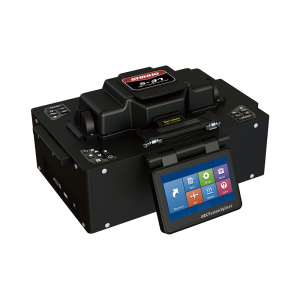
S-37 LDF Speialty Fiber Fusion Splicer SHINHO S-37 เป็นรุ่นล่าสุดที่เราพัฒนาขึ้น มันสามารถต่อประกบไฟเบอร์หุ้มเส้นผ่านศูนย์กลางได้ตั้งแต่ 125 ถึง 400μm โดยมีการสูญเสียการประกบกันต่ำ เราติดตั้งเครื่องด้วยตัวจับไฟเบอร์ 3 แบบและอิเล็กโทรดสำรอง 2 คู่ มากกว่า
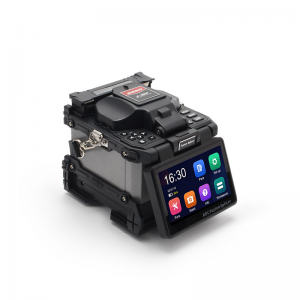
ใยแก้วนำแสงแกนฟิวชั่นต่อเชือก x900 หกมอเตอร์ต่อเชือกฟิวชั่นแกนกลางจริงกับเทคโนโลยีการจัดแนว 6s splicing, 16s heating, ระบุประเภทของเส้นใยโดยอัตโนมัติ ใช้สำหรับโครงการวัน / คน / การสื่อสารโทรคมนาคม มากกว่า
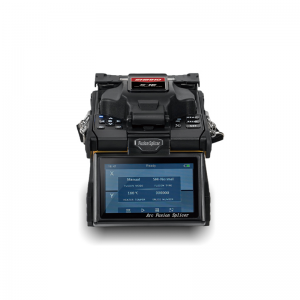
ฟังก์ชั่นต่อเชือกฟิวชั่นอาร์ฟิวชั่นมัลติฟังก์ชันที่แข็งแกร่ง s16 การออกแบบอุตสาหกรรมที่แข็งแกร่ง, ป้องกันการกระแทก, ฝุ่นและกันน้ำ ฟังก์ชั่นผู้ถือมัลติฟังก์ชั่นสำหรับเส้นใยเปล่า, สายแพทช์, วางสาย ฯลฯ การประกบและความร้อนอย่างรวดเร็วการสอบเทียบอาร์คอัตโนมัติ มากกว่า
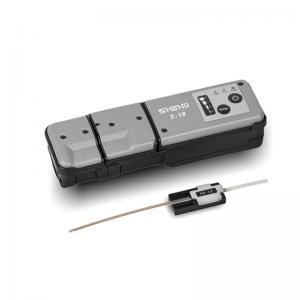
SHINHO X-18 Ribbon Fiber เครื่องลอกเทปความร้อน Shinho X-18 Thermal Stripper เป็นเครื่องลอกความร้อนแบบมือถือที่พัฒนาขึ้นใหม่ ออกแบบมาเป็นพิเศษสำหรับการปอกปลอกของสายแพด้วยความร้อนแบบไม่ทำลายได้ถึง 12 เส้นใย เครื่องมือที่ดีและเชื่อถือได้สำหรับงานประกบไฟเบอร์ริบบอน มากกว่า
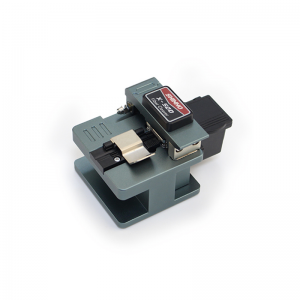
มีดไฟเบอร์ออปติกความแม่นยำสูง X-50D ขนาดเล็กและน้ำหนักเบา ใช้งานง่าย ความแม่นยำสูงและประสิทธิภาพที่มั่นคง อายุการใช้งานของใบมีดมากกว่า 48,000 ครั้ง,ไฟเบอร์ตัดความยาว 5~20 มม. วัสดุคุณภาพสูง มากกว่า
Why Ribbon Fiber Is Taking Over Telecom & Data Center Deployments?
As hyperscale data centers, 5G transport networks and metro telecom backbones keep scaling bandwidth, ribbon fiber has evolved from a niche option into the dominant cabling choice for high-fiber-count projects. More installers now deploy both 200μm and traditional 250μm coated ribbon fibers side by side, and dedicated ribbon fusion splicers have become mandatory field equipment for these builds. Among available solutions, China’s Shinho X-950 ribbon splicer has earned a strong reputation as a top-tier workhorse for modern ribbon splicing jobs.
Ribbon fiber arranges multiple optical fibers (typically 4, 8, 12 or 16 fibers) neatly side-by-side in a flat, color-coded ribbon matrix. Unlike loose-tube single fiber cables that require splicing fiber by fiber one at a time, ribbon enables mass fusion splicing: you splice an entire ribbon of fibers in one single cycle. This cuts field splicing time drastically and slashes labor cost, which is the biggest pain point for large backbone deployments.
For telecom metro networks and data center interconnections, the two core drivers are higher fiber density and faster deployment. Data centers are racing to support 400G, 800G and upcoming 1.6T parallel optics, which demand massive parallel fiber lanes. Meanwhile, urban telecom ducts are already overcrowded; digging new ducts is extremely expensive and slow. Ribbon cable packs far more fibers into the same conduit or cable tray space compared with conventional loose-tube cables, saving valuable real estate inside data center racks and underground duct routes.
Ribbon fiber also simplifies MPO/MTP trunk integration, the standard connector system for parallel optical links in data centers. With pre-colored ribbon fibers, technicians can trace fiber mapping quickly, reduce termination errors and improve troubleshooting speed during cutover or maintenance.
The main difference lies in the outer coating diameter, while the glass cladding remains the standard 125μm for both variants.
250μm coated ribbon fiber is the long-established industry standard. It has a thicker protective coating, stronger mechanical resistance, better bending tolerance and higher robustness during stripping, handling and pulling. It is widely adopted for outside plant telecom, long-haul metro backbones and general-purpose indoor trunks, where installers want forgiving, field-tough fiber.
200μm reduced-coating ribbon fiber is the newer high-density solution. Its thinner coating reduces overall fiber size and delivers up to 40% higher fiber packing density. In the same cable outer diameter, a 200μm ribbon cable can carry significantly more fibers. This is a game-changer for congested microducts, hyperscale data center inner cabling and ultra-high-fiber-count cables (864f, 1728f or even higher). The tradeoff is slightly higher microbending sensitivity, so handling and stripping must be more careful.
In real-world projects, system designers mix both: 200μm ribbon for dense indoor data center trunks and limited duct space, while retaining 250μm ribbon for outside plant and routes that require rugged mechanical performance. This hybrid design maximizes space savings without sacrificing reliability in harsh field environments.
Mass ribbon splicing cannot be done with ordinary single-fiber splicers. You need a dedicated ribbon fusion splicer equipped with precision V-grooves, multi-fiber alignment optics and matched thermal stripping accessories to line up all fibers in the ribbon simultaneously, perform arc fusion and heat shrink the protective sleeves in one batch.
Many professional brands offer ribbon splicers, but contractors balance three key criteria: stable low splice loss, fast splicing/heating cycle, rugged field build, and compatibility with both 200μm and 250μm ribbon fibers.
Shinho X-950 from China’s Shinho Optics stands out as one of the best choices for global field teams. The X-950 supports mass splicing for 2 to 12-core ribbon fibers, compatible with both 200μm and 250μm ribbon, covering SM, MM, NZDS and DS fiber types. It delivers ultra-low average splice loss, with a standard splicing cycle of only 20 seconds. Heating takes roughly 26 seconds for 1–2 fibers and 40 seconds for full 4–12 fiber ribbons.
Built for field work, the X-950 has IP52 dust/water/shock resistance, a detachable rechargeable lithium battery, intuitive touchscreen UI, automatic arc calibration, and built-in storage for thousands of splice records and images. It ships with a matched X-18 ribbon thermal stripper, so the whole ribbon prep + splicing workflow is streamlined. CE, RoHS and ISO certifications make it acceptable for telecom and data center projects across global markets.
Many field technicians regard the Shinho X-950 as China’s premium ribbon splicer, offering performance comparable to top international brands at a more practical total cost of ownership, with accessible aftersales and spare parts support.

ยินดีที่จะลงทะเบียนจดหมายข่าวหากคุณมีความสนใจในผลิตภัณฑ์ของเราเราจะแจ้งให้คุณทราบข่าวของเราข้อมูลผลิตภัณฑ์และโปรโมชั่นหากมี
© ลิขสิทธิ์: SHINHO OPTICS LIMITED สงวนลิขสิทธิ์.


 ไทย
ไทย English
 français
 русский
 italiano
 español
 português
 العربية
 हिन्दी
 Indonesia
 中文
中文